April 2026

Empty Shelves and A Diseased Imagination

Empty shelves and a diseased imagination It was the first lecture of the semester. After dispensing with all the usual questions about assignments, textbooks, and “will this be in the exam”, the rather bemused third-year class found themselves being marched down to the seminary library. “Choose any section of shelf in the Biblical Studies or Theology section,” I told them. This is the shelf they chose. “Now,” I instructed, “remove from this shelf all books written by white men.” Five minutes later… When we were finished, we just stood in silence and stared at the near-empty shelves This was all that was left… 4 books! One book written by a white woman and two copies of the same book co-written by a white woman and a white man. Only one book was written by an African man. In fact, only one book was written by any person of colour! Even I had not expected it to look quite so stark. Perhaps other shelves might have fared better, but it was still difficult to deny the reality of the empty shelves before us. And this is at a seminary that is painfully aware of these dynamics and at which the student body is less than 10% white students. I can only imagine what other seminary libraries might look like.   As I stood looking at those empty shelves, my mind was drawn to the words of Willie James Jennings that “Christianity in the Western world lives and moves within a diseased social imagination… woven into processes of colonial dominance.” [1]   Those bare shelves are a damning symptom of that diseased social imagination. A form of theological colonisation that has embedded (often) unspoken hierarchies of power and worth throughout global Christianity. Indigenous and contextual theological reflection and methodologies are regarded as, at best, inferior and more likely theologically and intellectually suspect. Western theology is regarded as not merely superior but as “normal” or orthodox. The late Ecuadorian theologian Rene Padilla once said, during a graduate seminar at the University of Cape Town, that “the Church in Latin America is a church without a theology…” [2] By this, he did not mean that there was no theology present (theology is always present, whether acknowledged or not) but rather that there was little to none theological reflection that was specific to the Latin American context. Theology Padilla would later say, “cannot be reduced to the repetition of doctrinal formulations borrowed from other latitudes. To be valid and appropriate, it must reflect the merging of the horizons of the historical situation and the horizons of the text. It will be relevant to the extent that it is expressed in symbols and thought forms which are part of the culture to which it is addressed, and to the extent that it responds to the questions and concerns which are raised in that context.” [3] In fairness, there has been some improvement in the last forty or so years, but if the empty seminary shelves are not enough for you to recognise the enduring validity of Padilla’s statement, not just Latin America but most of the Majority World, then perhaps you ought to ask yourself: References [1] Jennings WJ 2010. The Christian Imagination: Theology and the Origins of Race. Yale University Press: New Haven. p6,9. Social Imagination is, for Jennings, “an imaginative capacity to redefine the social, to claim, to embrace, to join, to desire.” (6) [2] Padilla CR 1978. The Contextualization of the Gospel. In: Journal of Theology for Southern Africa 24: 12-30, September, p. 20. [3] Padilla, C. R. 1980. Hermeneutics and Culture: A Theological Perspective. In Stott, J.R.W. & Coote, R. (eds.) Down to Earth: Studies in Christianity and Culture. Grand Rapids: William B. Eerdmans Publishing Company p73. Photo by Suzy Hazelwood from Pexels.

Empty Shelves and A Diseased Imagination Read More »

Why Write?

Why write? Somewhere along the way, I lost confidence. I forgot how to write. I was scared to write. “Of making many books there is no end…” What did I really have to contribute that had not already been said? Did the world really need the musings of yet another white, middle-aged man? Words are provocative, powerful, playful; words in the hands of a master author can change worlds. If not, the world itself. The best writing ought to raise more questions than answers, provoking more possibilities than certainties. I thought I could write like that, but somewhere along the way, I lost my faith. Yet people kept telling me I should write. I did not believe them. Write. They are just being polite. Write. Perhaps I did not want to believe them. Write. They just feel sorry for me. Write! Write! Right? For too long, I listened to all the wrong voices. Voices that told me what I should do. Who I should be. What I should think. Voices that grew soft in the presence of doubt. And that fell silent in the midst of struggle. Voices disembodied and distant in the loneliness. Yet there were other voices… ever-present, embodied, voices. Voices that “bear all things, believe all things, hope all things, endure all things.” Trusted voices. “Write!” Do I dare to trust them?  Write!  “I believe; help my unbelief!” Welcome to my cynical, terrified, self-doubting writing space. Maybe that is good enough for now… Note: I am aiming to begin with a once-a-week posting on Fridays and, hopefully, increase the output as things develop. If you would like to see articles and other resources posted more frequently, or if you were one of those people who have been (firmly) encouraging me to write, please consider becoming a paid subscriber and help make that a reality. Photo by Min An from Pexels

Why Write? Read More »

The Myth of Normal Theology

The myth of normal theology Often, things that appear normal contain so much more complexity and depth than meets the eye. In fact, now that we are thinking about it, the very word “normal” itself is far more complex and ideologically loaded than it first appears. I mean, normal is just… well… normal, right? But what constitutes “normal”? Normal for who? Shampoo for normal hair – on special for R64.99 at Shoprite.[1] But what exactly is normal hair? Normal hair in Langa might well be substantially different from “normal” hair in Constantia or Lenasia. What about skin-coloured crayons or flesh-coloured plasters? I regard my childhood as fairly “normal”, but growing up in apartheid-era South Africa, my childhood would have been anything but “normal” for the majority of people my age. What about just going to a “normal” school? Or growing up in a “normal” family, in a “normal” house in a “normal” neighbourhood? Nothing about my experience was “normal” for the vast majority of people in our country to this day. And that is not even considering issues of gender, sexuality, blended families, divorce, single moms and physical or learning challenges.   There is nothing universally valid regarding our concept of normality. Theology with Adjectives What about “normal” theology? Why do some theologies have adjectives while others don’t? Black theology, feminist theology, African theology, liberation theology, womanist theology, Latino/a theology, Minjung theology… and the list carries on… Yet there is no need for descriptors like “white theology”, “male theology” or “Western theology”? The Hidden Adjective What we often call “normal theology” is largely Westernised theology shaped by European Enlightenment assumptions and supported and propagated through white Western power. This is the normalising “orthodoxy” against which all other contextual theologies will be “weighed and found wanting.” [2] Theological colonisation reserves for itself the right to declare what is “normal” or orthodox, both in terms of content and method. Relegating all other contextual theological wrestling to the scrutiny of this one true and uniquely orthodox theology. The question is not whether theology is contextual. All theology is contextual. The crucial question is what context gets called “normal.” Orthodoxy, built on Western Enlightenment methodology and assumptions, is neither neutral nor without adjectives but rather a contextual theology among many other contextual theologies.   White Theology: There are several characteristics of “white theology” which are often presumed to be normative for all theology, and thus exported, as such, to the rest of the world. Decentring and Decolonising: Naming white theology as contextual frees others to name their own contexts and theologies as equally valid. Decolonising our theology requires, among other things, the decentring of the European and the Western world, and a re-centring of those voices that have previously been ignored or silenced, those on the margins, the poor and the oppressed. This is not a call to “cancel” or ignore the theological contributions of white, Western men. There is a place for them (us) too in the Kingdom of God. Western theology must be de-centred and its sacral position as the sole or primary formulators and arbiters of theological method and “orthodoxy” must be rejected. White-male-Western theology is not inherently wrong, but it must be put back into its place as one contextual theology among many contextual theologies.[5]   [1] Inspiration for this idea comes from Micah Bournes’ incredible spoken word poem, Normal Hair https://www.youtube.com/watch?v=v64z9wmoYls [2] Daniel 5:27 [3] Concerned Evangelicals 1986. Evangelical Witness in South Africa: A Critique of Evangelical Theology and Practice by South African Evangelicals. Eerdmans: Grand Rapids, p.28-31. The Kairos Document (1985) similarly refer to this type of theology as “Church Theology” as opposed to “Prophetic Theology”. [4] Molo Z 2025. Sharpening the Kairos Spear: A Theology of the People. The Warehouse https://www.warehouse.org.za/2025/10/07/sharpening-the-kairos-spear-a-theology-of-the-people/ [5] These ideas are developed from Carl Ellis’ book Free at Last: The Gospel in the African American Experience (1996. Downers Grove: IVP, p.142-147. Photo by Nothing Ahead

The Myth of Normal Theology Read More »

The Bible is Clear…

the Bible is clear… Theological colonisation seldom begins with violence. It begins with confidence. “The Bible is clear…” And when one community or people declare their interpretation as timeless, universal, and uniquely orthodox over every other community’s interpretation, then theological colonisation has begun. “The Bible is clear…” The problem with this kind of thinking is that even at the most basic level, it is not true to reality. Often, the Bible is not clear, makes conflicting statements, and appears to approve of things we might find reprehensible. If the Bible is so clear to understand, then why have well-intentioned and sincere Christians (even highly educated ones) been arguing over issues as seemingly fundamental as baptism, the Lord’s Supper, or the interrelation of faith and works (cue Paul and James), let’s not even get started on the role of women, church polity, or gifts of the Spirit. Most churches allow men to come to church with long hair and women without head coverings, but Paul expressly forbids both (1 Corinthians 11:5-6, 11-13). I don’t know anyone who has had to impregnate his deceased brother’s widow, in order to preserve his brother’s lineage (Deuteronomy 25:5-6). Despite God seemingly being fairly serious about this instruction, failure to do so could even result in death (Genesis 38:3-10). Many of us enjoy shellfish (Deuteronomy 14:9-10), don’t execute rebellious children (Deuteronomy 21:18-21) or false prophets (Deuteronomy 18:20), or force an unmarried woman to marry her rapists, with no possibility of divorce (Deuteronomy 22:28-29). We all instinctively know these passages require interpretation. No one I know gives money to everyone who asks (Matthew 5:42) or offers their mugger their shirt after being robbed of their jacket (Luke 6:29). Most people don’t make their wife sleep in a separate bed during her monthly cycle (Leviticus 15:19-23), build a parapet around the roof of their house (Deuteronomy 22:8) or condone slavery (Leviticus 25:44; Ephesians 6:5-6; 1 Peter 3:18). Again God, or the Bible at least, seems quite clear, at times, on most of those things. Forgive me if the above paragraph feels slightly disingenuous. Any frustration you feel is not likely because you find yourself in agreement with the ongoing validity or ethical virtue of the above scenarios, but more likely because you know that the above readings display almost no awareness of the historical background or use of the appropriate hermeneutical tools or principles. And that is exactly my point. None of us read the Bible “flat”, reading meaning straight off the surface of the text. We are always interpreting whatever we read. All theology is interpreted theology. There is just no other way. Even those who may claim to “just read the Bible” are constantly interpreting and contextualizing what they read. We may disagree on what methods or tools of interpretation we prefer, but that does not change the reality that we are always interpreting what we read. Durham University theologian, Stephen C Barton, reminds us that “Meaning is not something that is simply discovered in the text or ‘read off’ the surface of the text. It is, rather, created in the encounter between text and reader…”[1]  What we see in any given text, and especially what we understand the implications of that text to be, are all too often determined by what our experiences, socio-economic context, political affiliations, and cultural values have trained us to see. This may sound like I am advocating for rampant, unchecked relativism in biblical interpretation, and I am not. In a later post, we will discuss hermeneutical safeguards that keep us from plunging off the cliff of relativism, but for now, the key idea I want to focus on is that there is no such thing as a “pure” form of biblical theology unbounded by interpretation or context. We all read Scripture through a contextual lens. Or to put it another way, we all read Scripture from somewhere. It is impossible to read Scripture from a neutral perspective because each of us is a contextually located reader. The late South African missiologist David Bosch reminds us that “Interpreting a text is not only a literary exercise. Our entire context comes into play when we interpret a biblical text. One therefore has to concede that all theology… is, by its very nature, contextual.”[ Despite colonial-era Western missionaries claiming to “just preach the Bible,” they were never preaching a neutral understanding of the text. Instead, they were preaching an interpretation of Scripture filtered through the lenses of Enlightenment rationalism, imperialistic ideals, and deeply embedded assumptions of racial and cultural supremacy. Historically, claims for neutrality in interpretation have masked power and economic interests. Theological colonisation is when one contextual reading asserts its interpretation as the uniquely orthodox, universal, and self-evident interpretation, which must be exported unchanged and unchangeable to the rest of the world. To ignore the role of context in interpretation, claiming instead some sort of a-contextual neutrality as post-Enlightenment Western theology often did (and which conservative evangelical theology often still does), is not to escape from the problem of interpretative subjectivity but rather to allow context to sneak in unrecognised, through the back door of the interpretive process. The unacknowledged context does not weaken but grows in power, ultimately dominating the interpretation process.   And when that unacknowledged context is one of capitalist ambition, white supremacy, and Western Enlightenment philosophies, it cannot help but build theologies of dominance, greed, and raw power. The answer is not the abandonment of Scripture but the fostering of a greater epistemological[3] humility, as we learn to read Scripture in community with those unlike ourselves. Our interpretation of Scripture is not weakened by our finitude, but enriched, deepened, and disrupted when we engage with other equally limited but contextually diverse theologies and voices. [1] Barton, Stephen C. 2010. Historical Criticism and Social Scientific Perspectives in New Testament Study. In Green, Joel B. (ed) Hearing the New Testament: Strategies for Interpretation (Second Edition. Grand Rapids: Eerdmans. p47  [2] Bosch, D.J. 1991. Transforming Mission: Paradigm Shifts in Theology

The Bible is Clear… Read More »

A Morning in Prison

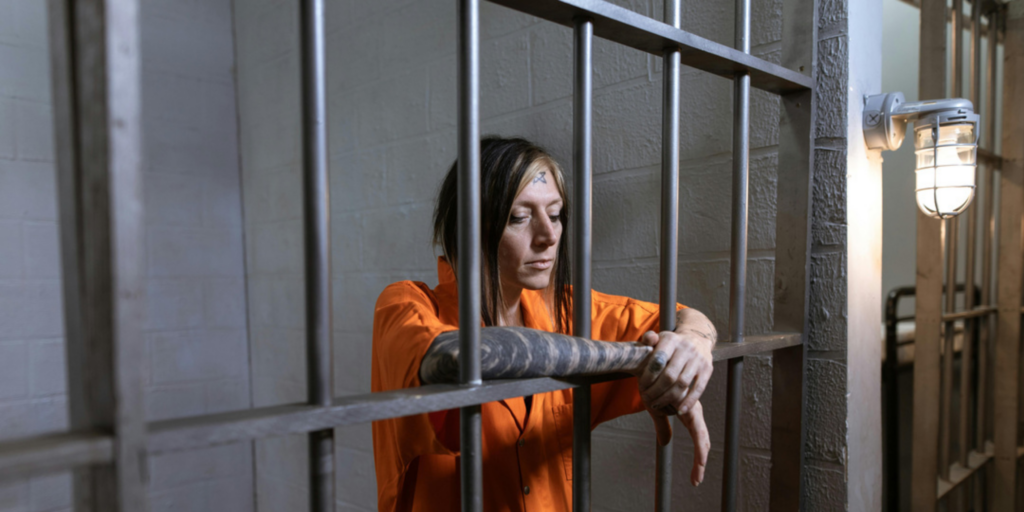
A Morning in prison I originally wrote this reflection in 2014, and it remains one of my favourite pieces of writing. I have reposted it now with some minor editing I spent the best part of one Wednesday morning trying to get into prison! A member of our community had been arrested on drug possession, and I had been trying to confirm her whereabouts for weeks. Arrest and imprisonment are a fairly normal feature of life for her friends and family. “She’s probably in Pollsmoor” was the rather cursory, not very concerned answer to my inquiry. I still had no definite answer when I arrived at the metal gates of Pollsmoor’s visitors centre. [1] Finding information about a possible inmate over the phone had also proven impossible. “Oh no, they never answer the phone,” a woman visiting her husband in maximum security told me as we waited. After a few vaguely directional pointing gestures, I had found myself seated on the hard wooden benches of the visitors’ waiting area. Rather than conduct a study of the faded lime green government issue wall paint, I managed to strike up a conversation with the (mostly) ladies waiting with me. Most of them, it seemed, were there to visit their husbands, brothers or sons on numerous drug-related charges. I could not help but notice the irony when the same woman who told me the prison officials never answer their phone laughingly told me that after her husband was arrested, she did not speak to him for six months. She refused to take his phone calls or come visit. “Hy het al die neighbours gecall, en vir hulle gevra om met my to praat. Maar ek will nie.” (He called all the neighbours and asked them to talk to me. But I didn’t want to) Finally, I managed to flag down a willing prison official, who sent me back the way I had come, using the obligatory vague hand gestures and mumbled directions. The lady at the computer quickly located who I was looking for and presented me with a torn-off scrap of paper with something illegible scrawled on it. Then, without another look, she dismissively waved me back to the hard wooden benches. The women waiting to see their sons and husbands were eager to pass the time in conversation. They knew all too well how the system worked. “This is the kind of thing you really don’t want to know about,” one told me. Reassuring me that I should not have much longer to wait. They, on the other hand, could expect to wait at least another three or four hours before they got in. She had come with a friend whose husband and two sons were all imprisoned at Pollsmoor. Another woman told me her husband was caught with 75 Mandrax tablets [2] in his possession. The judge set bail at R50 000. “Where am I supposed to come up with that kind of money?” she asked me. The women soon tire of me and begin talking among themselves. “They all become so lovable when they are in jail,” one says, “But as soon as they are outside, it is all the same k*k as before.” “Except when you come visit, they all complain about the food you bring them,” a second adds, “But I told him Pollsmoor is not a bladdy holiday.” “Lyk die soos a restaurant vir jou?” (Does this look like a restaurant to you?) agrees a third. Shortly after that, the women were moved to another waiting station. I bought a Coke and stared out the window at the mountains, struck by the contrast between the drab, oppressive prison environment and the breathtaking beauty of the Cape mountains. I imagined the prisoners tortured by the beauty they were forced to endure every day. Knowing that for them it was off-limits. It was not only the bars of the prison that kept them away from the mountains, I mused. “Female”, an abrasive voice rouses me from my contemplations. I swung around desperately seeking the disembodied voice that I was no longer convinced I had in fact heard. I searched frantically, worried that after all this time I might miss my turn. A few minutes later, I managed to locate the body to go with the voice. The voice, having failed to secure an instantaneous response, had understandably decided to resume her coffee-drinking duties. She gave me that look of disdain that only underpaid government officials and Shoprite cashiers can give you, took my scrap of paper and told me to wait. A few minutes later, we were walking along the prison complex roads on our way to the female prison. Pollsmoor actually consists of four prisons in one complex (Maximum Security, Awaiting Trial, Female and Juvenile prisons). I was the only visitor to the female prison at this time. As we walked along, another warden joined her colleague. As I listened in, I managed to catch up on all the prison gossip. Romance, it would seem, is not dead in khaki uniforms. Overtime pay, however, is slightly less forthcoming. As we arrived at our destination, I was directed with the now expected cursory hand gesture and terse instruction, “There.” After waiting “there” for about 20 minutes, I was noticed and wordlessly interrogated, by way of a sharply raised eyebrow, as to my intent. I managed to fumble the precious scrap of paper from my pocket and stammer out a name. The warder enthusiastically (ok, I made that part up) consulted a rather large printed-out list and informed me she was not there. I tentatively suggested that perhaps the list was incorrect, as it contradicted the information earlier attained from the computer records. I assumed the crash position! Cue another one of those underpaid government worker stares reserved for those who would dare disturb crucial research into the longevity of government issue chairs. I hastily scribbled the name on a piece of paper shoved below my nose. As

A Morning in Prison Read More »