

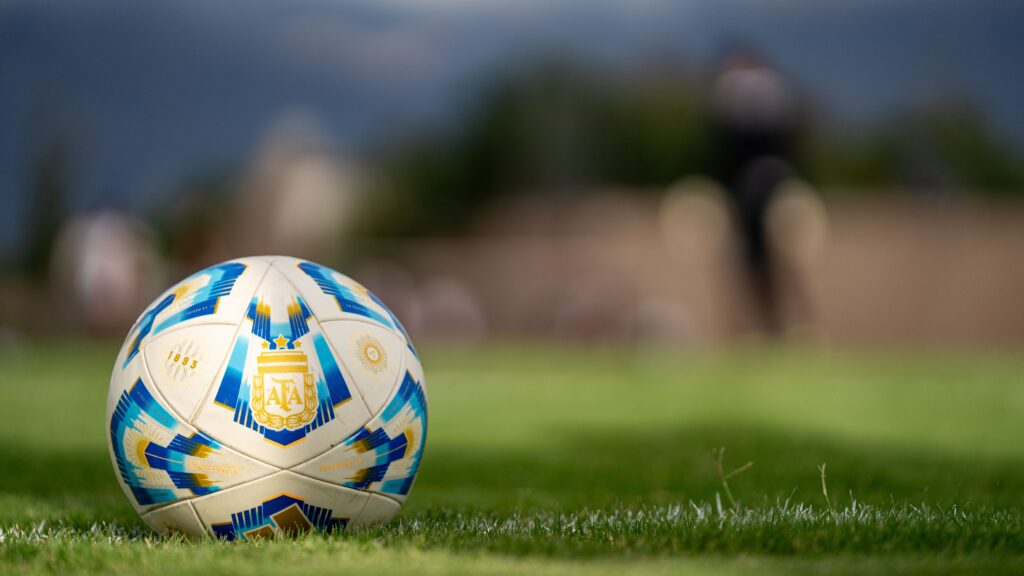
Some Things are More Important Than Football
I have been sitting with this for a while now. Too scared to fully formulate the thoughts, never mind speak them out loud or capture them in writing. Articulating these thoughts will require a decision on my part. A decision I don’t want to make.
At what point do fans completely boycott watching the FIFA World Cup? I realise there has been a big movement to boycott attending in person.
But what about the rest of us? Do we simply sit back and enjoy the spectacle, all the while complaining about the injustices to black and brown players, officials, and fans? This is even before we mention the USA’s support for the Palestinian genocide and the repealing of the Civil Rights Act in their own country.
If there is one thing you know about me, if you have spent any amount of time with me, it is that I love football. I can talk about football for hours. Ask the guys at the print shop across the road. I am honestly agonising over this decision. Can I, with any integrity, support the World Cup in the USA? Can I contribute to making this World Cup a success, sending a message to bigots and tyrants everywhere that, at the end of the day, they will get away with their behaviour? That football is more important than the lives of Palestinian children, the dignity of African athletes, or the civil liberties of black Americans.
Can we allow Trump and his sycophant Infantino the opportunity to claim the moral victory of a successful World Cup, knowing that it is built on the backs of murdered children, white supremacy and detention centres?
Hit ’em Where it Hurts
The anti-apartheid movement taught me that the biggest weapon against injustice is that which affects the pockets of the wealthy. FIFA makes billions (projected to be $4.2 billion for this World Cup) in broadcasting rights alone. In the short term, a TV boycott will not significantly affect FIFA’s revenue, as broadcasting rights are generally sold up front and are non-refundable. [1] But the impact on future revenue could be significant.
In 2026, broadcasting networks will lose billions if no one watches the adverts, causing sponsors to pull out of future events, merchandise sales to plummet, and broadcasting rights to be slashed for future World Cups. The USA should already have lost the right to host the World Cup. If FIFA will not stand up against injustice, then we must help them find their backbone by hitting them where it hurts most. When financial gain is threatened, you will be amazed at who suddenly finds a conscience.
Prophetic Imagination
As a theologian, I have been heavily influenced by Walter Brueggemann’s concept of the prophetic imagination. Defined as “the fostering of a capacity to see the world as it is but to move beyond that to imagine the world as it might be. A society shaped and transformed by God’s vision and values for this world.” [1]
Prophetic Imagination, Brueggemann says, has a two-fold focus: namely, critique and energising. The prevailing systems and powers have numbed us to the pain and death of the systems and narratives of oppression and injustice loose in the world. The kind of attitude that says, “Stop making such a big deal about it, and just enjoy the football.” Numbness and death prevail.
The Old Testament prophets, Brueggemann argues, used startling images, words and actions to disturb Israel’s illusion of the prevailing status quo, exposing the prevailing powers and systems as unable to deliver on their promises and claims, cutting through the numbness and death and provoking an alternative vision of reality.
- Ezekiel lay on his side for more than a year, to represent the day of coming punishment for both Northern and Southern kingdoms (4:4-6). During this time, the prophet was to bake his food over a fire fuelled by human excrement, representing how the people of Israel would be forced to eat defiled food among the nations to which the Lord would drive them (4:12-13)
- Isaiah walked around completely naked and barefoot for three years (Isaiah 20), as a sign to Egypt and Cush that they would be led away barefoot and stripped before the king of Assyria (Isaiah 20).
- Jeremiah smashed a clay pot (Jeremiah 19) to represent the coming shattering of Jerusalem and its people because of their idolatry.
- Hosea married a promiscuous woman (possibly a prostitute) to demonstrate God’s unfailing love despite Israel’s unfaithfulness.
Protesting the Kiffness
My mind first began to turn towards this form of prophetic imagination late last year in relation to South African artist The Kiffness‘ scheduled concert at Kirstenbosch Botanical Gardens, in Cape Town. The artist, whose real name is David Scott, was accused by activists of supporting the genocide in Gaza and inciting Islamophobia. This, together with his previous comments supporting right-wing causes, spreading misinformation about race laws and the presence of a white genocide in South Africa, led to protests outside Kirstenbosch in the weeks leading up to the concert. [2]
The protests, perhaps somewhat predictably, caused many self-proclaimed “defenders of free speech” [3] and those with views similar to Scott to rally around him, selling out the concert in the process. As disappointed as I was by the attendance and as much as I agreed with the protests, I could not argue that the protests had made the concert an overwhelming success. What could the protesters have done differently? Was there a better way to protest that did not benefit Scott or make him a martyr for free speech?
What would prophetic imagination look like in this context? If protesting the concert taking place only fuels support for Scott, then let the concert go ahead… But what if protesters and those who oppose Scott all bought multiple tickets to the concert (I realise this is not always financially feasible)? What if they bought most (or all) of the tickets? And then just did not pitch. What if Scott’s moment of triumph is a handful of people spread out across a large venue? What if the only two people planted a large Palestinian flag on the grass right in front of Scott and then left? What if social media were filled with images of Scott standing alone on the stage before the largely empty venue, with only a Palestinian flag for company? What a powerful, silent critique of the prevailing systems and narratives of numbness and death.
Scott remains free to exercise his free speech, but there just won’t be anyone to hear it. Like Scott, the protestors are free to exercise their rights to freedom of assembly (or not)! Scott would still get paid, so no making him a martyr either. But Scott and his narratives will stand naked and exposed before the silent venue. A powerful and disruptive image that, without words about what we are no longer prepared to tolerate, many venues and sponsors might think twice about being further associated with him. After all, venues are free to invite whoever they want. Freedom of speech is not freedom from the consequences of that speech. No one and no venue is obligated to Scott.
Back to the Football
So what does all this have to do with football? What might prophetic imagination look like in this scenario?
Imagine the powerful, disturbing, disruptive act of prophetic imagination that empty stadiums and blank screens would be to the powers of numbness and death. Some things are more important than football.
What if we just refused to participate at all? What if we, those who love the sport most, refused to participate? Could we make it even clearer, watching the group-stage games being held in Canada and Mexico in record numbers? Imagine Canada versus Qatar smashing viewing records while the World Cup final has only a fraction of those numbers. Even Donald Trump would struggle to spin that as a success.
Is it that Simple Though?
No, of course not.
Consider all that the World Cup means to a Panamania defender or a goalkeeper from Cabo Verde or a nineteen-year-old striker from Algeria playing in his first World Cup. This is not some abstract philosophical or ethical complexity for them. This is the culmination of years of endless training, hard work, and sacrifice. A childhood spent playing on dusty pitches in hand-me-down boots. A family that has sacrificed everything to get them to where they now stand. For many of these players, the World Cup is not just an opportunity for sporting glory but an opportunity to be noticed. To sign a contract that will transform their life and guarantee their financial future. Not just of their lives but of everyone dependent on them. Potentially transform the lives of an entire community or village.
A boycott will not hurt the current FIFA executives; they have already been paid. Neither does it hurt Trump or Infantino; they will find other means to satisfy their greed and need for self-satisfaction. The people most vulnerable to the consequences of a failed World Cup are the very people we claim to stand in solidarity with. The Senegalese full-back, whose transfer value remains minimal because no one was there to notice him. Or the Haitian midfielder who returns home to a community desperate for him to succeed. How many potential careers could we ruin? How many black and brown players could be robbed of financial security for their families? What might the potential impact on some of the poorest communities in Africa, Asia, and South America be?
But might their World Cup dreams not already be tainted by the context in which it is being held? Must the Congolese defender put his prowess on display on fields from which the blood of Palestinian children cries out? In a country actively seeking to dismantle the civil rights of those who share his skin tone and ancestry. Can dreams truly be realised on the broken backs of the vulnerable and oppressed?
And it’s not like the previous two World Cup hosts (Qatar and Russia) have not been ethically complex either.
Tonight it Begins…
The World Cup starts tonight, and I honestly am still conflicted. I desperately want to get lost in the drama of penalty shootouts, wonder goals, and underdog runs deep into the tournament. But some things are more important than football. There is perhaps no right answer to this question. The impact on the lives of the poor and marginalised is undeniable. The only question is which will do the least damage.
I began by saying I was afraid to acknowledge and fully formulate these thoughts. I think I have reached a decision, but if I am honest, I don’t like my decision and desperately want to be persuaded otherwise.
This World Cup, I will be watching the games played in Mexico. I will be watching the games played in Canada. I will watch every game that I can, but when the tournament moves to the United States, I will find something else to do. Not because I don’t love football, but because I do. Football deserves better than to be used as the legitimiser of genocide and white supremacy. The players deserve better. Palestinian children deserve to grow up and be given the chance to play in a World Cup of their own one day.
This is going to hurt, I won’t lie. But prophetic imagination without cost is just empty rhetoric and nice ideas. And let’s not deceive ourselves, the cost to me is nothing compared to that currently being paid by Palestinian families, Somali refugees, and the American descendants of enslaved people.
[1] van Steenwyk, M. (2017). What is the “Prophetic Imagination?” The Centre for Prophetic Imagination. [Online Video] Available from https://www.youtube.com/watch?v=eJXEMLBSgio&list=PL0-qOmdGl9zQ4_BGZ3k-LX7w4VzhFxMmw [Accessed 11/6/2026]
2] Kapp, T. (2025) The (un) “Kiffness” of Boer Zionism in SA: Israel, Trump, and White Christian Evangelicals on ‘X’. [LinkedIn] 30 November. Available from: https://www.linkedin.com/pulse/unkiffness-boer-zionism-sa-israel-trump-white-x-dr-tristan-kapp-phd-k89vf [Accessed 11/6/2026]
[3] I notice these same advocates for free speech seldom have the same concerns when a black politician says something they disagree with.
Photo by Franco Monsalvo from Pexels