

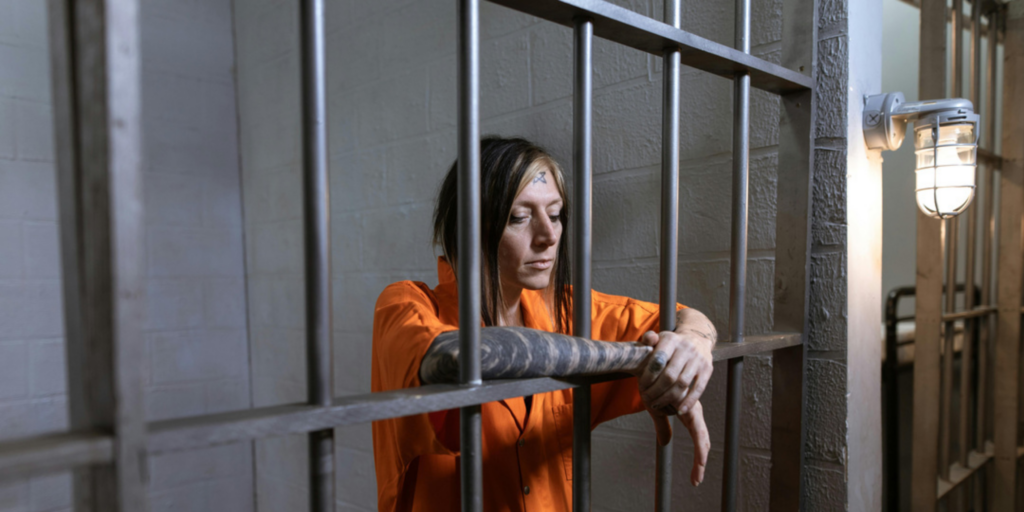
A Morning in prison
I originally wrote this reflection in 2014, and it remains one of my favourite pieces of writing. I have reposted it now with some minor editing
I spent the best part of one Wednesday morning trying to get into prison!
A member of our community had been arrested on drug possession, and I had been trying to confirm her whereabouts for weeks. Arrest and imprisonment are a fairly normal feature of life for her friends and family. “She’s probably in Pollsmoor” was the rather cursory, not very concerned answer to my inquiry. I still had no definite answer when I arrived at the metal gates of Pollsmoor’s visitors centre. [1]
Finding information about a possible inmate over the phone had also proven impossible. “Oh no, they never answer the phone,” a woman visiting her husband in maximum security told me as we waited. After a few vaguely directional pointing gestures, I had found myself seated on the hard wooden benches of the visitors’ waiting area. Rather than conduct a study of the faded lime green government issue wall paint, I managed to strike up a conversation with the (mostly) ladies waiting with me. Most of them, it seemed, were there to visit their husbands, brothers or sons on numerous drug-related charges.
I could not help but notice the irony when the same woman who told me the prison officials never answer their phone laughingly told me that after her husband was arrested, she did not speak to him for six months. She refused to take his phone calls or come visit. “Hy het al die neighbours gecall, en vir hulle gevra om met my to praat. Maar ek will nie.” (He called all the neighbours and asked them to talk to me. But I didn’t want to)
Finally, I managed to flag down a willing prison official, who sent me back the way I had come, using the obligatory vague hand gestures and mumbled directions. The lady at the computer quickly located who I was looking for and presented me with a torn-off scrap of paper with something illegible scrawled on it. Then, without another look, she dismissively waved me back to the hard wooden benches.
The women waiting to see their sons and husbands were eager to pass the time in conversation. They knew all too well how the system worked. “This is the kind of thing you really don’t want to know about,” one told me. Reassuring me that I should not have much longer to wait. They, on the other hand, could expect to wait at least another three or four hours before they got in.
She had come with a friend whose husband and two sons were all imprisoned at Pollsmoor. Another woman told me her husband was caught with 75 Mandrax tablets [2] in his possession. The judge set bail at R50 000. “Where am I supposed to come up with that kind of money?” she asked me.
The women soon tire of me and begin talking among themselves. “They all become so lovable when they are in jail,” one says, “But as soon as they are outside, it is all the same k*k as before.”
“Except when you come visit, they all complain about the food you bring them,” a second adds, “But I told him Pollsmoor is not a bladdy holiday.”
“Lyk die soos a restaurant vir jou?” (Does this look like a restaurant to you?) agrees a third.
Shortly after that, the women were moved to another waiting station.
I bought a Coke and stared out the window at the mountains, struck by the contrast between the drab, oppressive prison environment and the breathtaking beauty of the Cape mountains. I imagined the prisoners tortured by the beauty they were forced to endure every day. Knowing that for them it was off-limits. It was not only the bars of the prison that kept them away from the mountains, I mused.
“Female”, an abrasive voice rouses me from my contemplations. I swung around desperately seeking the disembodied voice that I was no longer convinced I had in fact heard. I searched frantically, worried that after all this time I might miss my turn. A few minutes later, I managed to locate the body to go with the voice. The voice, having failed to secure an instantaneous response, had understandably decided to resume her coffee-drinking duties. She gave me that look of disdain that only underpaid government officials and Shoprite cashiers can give you, took my scrap of paper and told me to wait.
A few minutes later, we were walking along the prison complex roads on our way to the female prison. Pollsmoor actually consists of four prisons in one complex (Maximum Security, Awaiting Trial, Female and Juvenile prisons). I was the only visitor to the female prison at this time. As we walked along, another warden joined her colleague. As I listened in, I managed to catch up on all the prison gossip. Romance, it would seem, is not dead in khaki uniforms. Overtime pay, however, is slightly less forthcoming.
As we arrived at our destination, I was directed with the now expected cursory hand gesture and terse instruction, “There.” After waiting “there” for about 20 minutes, I was noticed and wordlessly interrogated, by way of a sharply raised eyebrow, as to my intent. I managed to fumble the precious scrap of paper from my pocket and stammer out a name. The warder enthusiastically (ok, I made that part up) consulted a rather large printed-out list and informed me she was not there. I tentatively suggested that perhaps the list was incorrect, as it contradicted the information earlier attained from the computer records.
I assumed the crash position!
Cue another one of those underpaid government worker stares reserved for those who would dare disturb crucial research into the longevity of government issue chairs. I hastily scribbled the name on a piece of paper shoved below my nose. As the prison official moved off to eagerly correct the problem (ok I made that bit up too) of the missing inmate, I resumed my long-running study of the face brick wall. The few other brick enthusiasts present were too deep in concentration to engage in conversation.
At this point, a large, scary-looking white guy arrives (L.S.L.W.G). The only other white person I have seen this morning. He likes to talk. He tells us he is here to bail out a 19-year-old girl arrested on drug charges. L.S.L.W.G. finds it necessary to mention that she is a pretty white girl. The police captain who arrested her, it turns out, is a friend of L.S.L.W.G.’s mother. Rather than see her sit in jail, the captain has decided to pay her bail on the condition that she stays with L.S.L.W.G. and his mom. I could not help wondering if this had anything to do with her being a “pretty white girl…”
I am somewhat less than surprised to discover that L.S.L.W.G. has himself spent some time as a guest of the state…. more than once, it turns out… “But nothing major”, he shrugs, “just some GBH charges.” [3] I decided that today I would be nice. “The longest time I spent here,” L.S.L.W.G. opens up, “was about four months, in awaiting trial. Ja, and when my case finally got to court, it was thrown out the same day, because the oke who laid a charge never even bothered to show up. Four months, hey boet.” I was very sympathetic to his pain, but I decided not to risk a hug.
As it turns out, there is a somewhat unconventional philanthropic side to L.S.L.W.G.’s world. His girlfriend runs a “massage parlour” and has “rescued” a number of girls from Pollsmoor, giving them a second chance and a place to stay. “They earn good money,” he admits. I catch the assumption that earning good money and staying out of jail is the equivalent of a second chance. Perhaps for many, it is all the second chance they can imagine. I wish I could tell these girls that there is a hope far more than all they could ask or imagine. [4]
“Can’t your girlfriend find a place for this young girl?” another woman asks.
“I don’t want to get involved,” L.S.L.W.G says.
Eventually, they have managed to locate who I am looking for, and they usher me in to see her. In a cramped cubicle, through thick glass, just like in the movies. She tells me what she thinks I want to hear. I tell her we love and care for her. She cries when we talk about her children and promises me she is going to sort out her life this time. I wish I had the faith to believe her, but I have low expectations and big prayers.
“It is almost lunchtime,” she says. I get the hint. I pray with her and then leave.
It took me almost three hours to get in for a 15-minute visit.
I have to rush; I am late for another appointment. There are no phones allowed when you enter the prison. I felt the isolation, the disconnect, albeit briefly. I found myself imagining how isolated the man whose wife refused to visit or speak to him felt. L.S.L.W.G., though, had assured us that he received calls every night from his friends on the inside, asking for airtime or Shoprite vouchers for their family. “You will be surprised at how much money there is in here,” he told us with that knowing look.
Now I sit staring at the screen, waiting for that final flow of words that lets me know my piece has ended. But there is nothing. I have no great lessons, no moral injunctions, no clever analogies. I simply spent one extraordinary morning experiencing the cycle of ordinary life for thousands of families, thousands of wives, mothers, fathers, children and grandfathers across our beautiful, broken city.
And where is the church at large in all of this, I wonder? Busy, Silent, Sorry, Scared, Apathetic…
[1] Pollsmoor is the largest and most notorious prison in the Western Cape Province of South Africa.
[2] Mandrax ( methaqualone) is one of the most commonly used drugs in the Western Cape. Highly addictive and commonly smoked with cannabis, it produces feelings of intense relaxation or drowsiness.
[3] Grievous Bodily Harm
[4] Ephesians 3:20
Photo by RDNE Stock project